Introduction: The Era of Regulatory Clarity
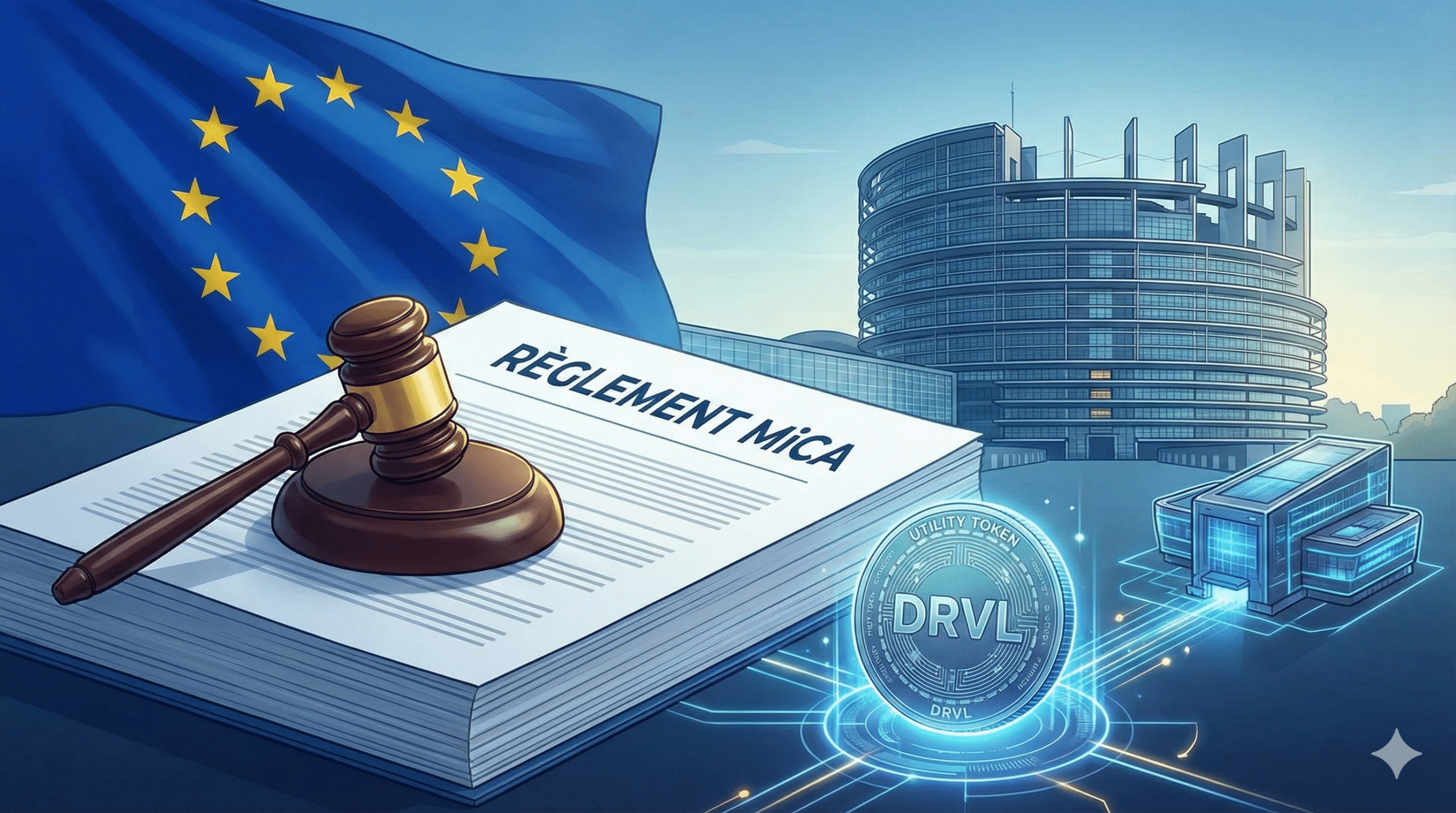
Europe is preparing to turn a major page in the history of digital assets with the full implementation of the regulation. MiCA (Markets in Crypto-Assets) in 2024 and 2025. This framework is essential for guiding and defining the MiCA Utility Tokens Regulation across the 27 Member States. Born out of the need to regulate a rapidly expanding crypto market, MiCA aims to harmonise legislation.
For innovative players such as De Ravel Group, which is preparing for the future launch of its Utility Token (UT), DRVL, understanding and anticipating MiCA is not an option, but a strategic requirement. This regulation is the EU's first structured attempt to ensure financial stability, protect consumers and, above all, clearly define the legal framework for utility tokens.
MiCA Utility Tokens Regulation: Classification and Challenges
The MiCA regulation introduces a precise classification of crypto-assets, putting an end to the legal uncertainty that has long hampered innovation. Understanding where the DRVL Token fits in is essential.
- Asset-Referenced Tokens (ART): Tokens stabilised by reference to several currencies or assets (e.g. a basket of currencies).
- Electronic Money Tokens (EMT): Stable tokens pegged to a single fiat currency (the euro, the dollar).
- Other Crypto-Assets: It is in this residual category that the Utility Tokens (UT).
Definition and Significance of Utility Tokens (UT) for De Ravel Group
A Utility Token is defined by MiCA as a type of crypto-asset. intended solely to provide access to a good or service proposed by the issuer.
For projects such as De Ravel Group's DRVL Token – which will be used to provide privileged access or discounts on future services offered by our subsidiaries – this classification is crucial. MiCA confirms that:
- The token must be purely functional: its utility must not be disguised as a financial investment product.
- UTs benefit from a lighter regulatory regime: unlike ARTs and EMTs, UTs are not subject to the strict requirement of being approved by a financial authority (such as the AMF in France).
Key Requirements for Issuing a MiCA-Compliant Utility Token
Although the UT regime has been simplified, it is not without rules. In order to raise public funds, an issuer must comply with several major transparency and security obligations imposed by the MiCA Utility Tokens Regulation.
Writing the White Paper: The Heart of Transparency
The central obligation is the publication of a White Paper detailed, which must be notified to the competent authority at least 20 working days before the start of the public offer. This document must contain:
- Rights and Obligations A clear description of the rights and obligations associated with the token (its practical utility).
- Technology Details about the blockchain used (Ethereum, in our case) and the associated technical risks.
- The Issuer and the Project : Comprehensive information about the issuing company (De Ravel Group, subsidiaries) and the specific use of the funds raised.
Quality and Transparency Guarantee
The issuer of a Utility Token has a legal obligation to act «honestly, fairly and professionally». This includes:
- Management of Conflicts of Interest : Implementation of procedures to avoid conflicts of interest.
- Customer Protection (KYC/AML) : The application of strict anti-money laundering (AML) and know your customer (KYC) rules, even if the offering is «streamlined».
De Ravel Group and MiCA Anticipation: A Compliance Strategy
For De Ravel Group, the arrival of MiCA is an opportunity to validate our model and reassure our future investors:
- Transparency Guaranteed: The DRVL Token project is in the process of preparing to integrate all the requirements of the MiCA White Paper, ensuring complete clarity on the roadmap and the use of funds (€70 million).
- Legitimacy of the Model: MiCA makes it possible to clearly distinguish serious, functional projects from speculative attempts, legitimising the De Ravel Group's approach, which is anchored in real financial and real estate subsidiaries.
- Access to the European Market: Once compliant and notified in a member country, the DRVL Token offering may be made available. throughout the European Union (the MiCA «passport»).
Conclusion: The Future of Financing is Regulated
MiCA is much more than a series of constraints; it is a maturity gap for the crypto market. It provides the necessary framework of trust to attract institutional investors and the general public, which are essential for successfully raising €70 million in funding.
De Ravel Group is committed to being at the forefront of this compliance, ensuring our future contributors a secure, legal, and transparent funding platform.
For more information on official texts, please consult the Regulation (EU) 2023/1114 on crypto-asset markets (MiCA) on the website EUR-Lex of the European Union: https://eur-lex.europa.eu/legal-content/FR/TXT/?uri=CELEX:32023R1114