




The’utility of a utility token is often misunderstood.
However, in serious blockchain projects, utility tokens play a central role that goes far beyond any speculative logic.
In this article, we will explain clearly What is the purpose of a utility token?,
what is its practical use in an ecosystem and why usage is the true basis of its value.
What is the purpose of a utility token?
One utility token is a digital token designed for use within a specific ecosystem.
Its main purpose is to enable access to specific services, features, or uses.
Unlike traditional financial instruments, a utility token:
- does not represent a share of a company's capital,
- does not entitle the holder to dividends,
- does not constitute a promise of return.
The usefulness of a utility token: practical applications
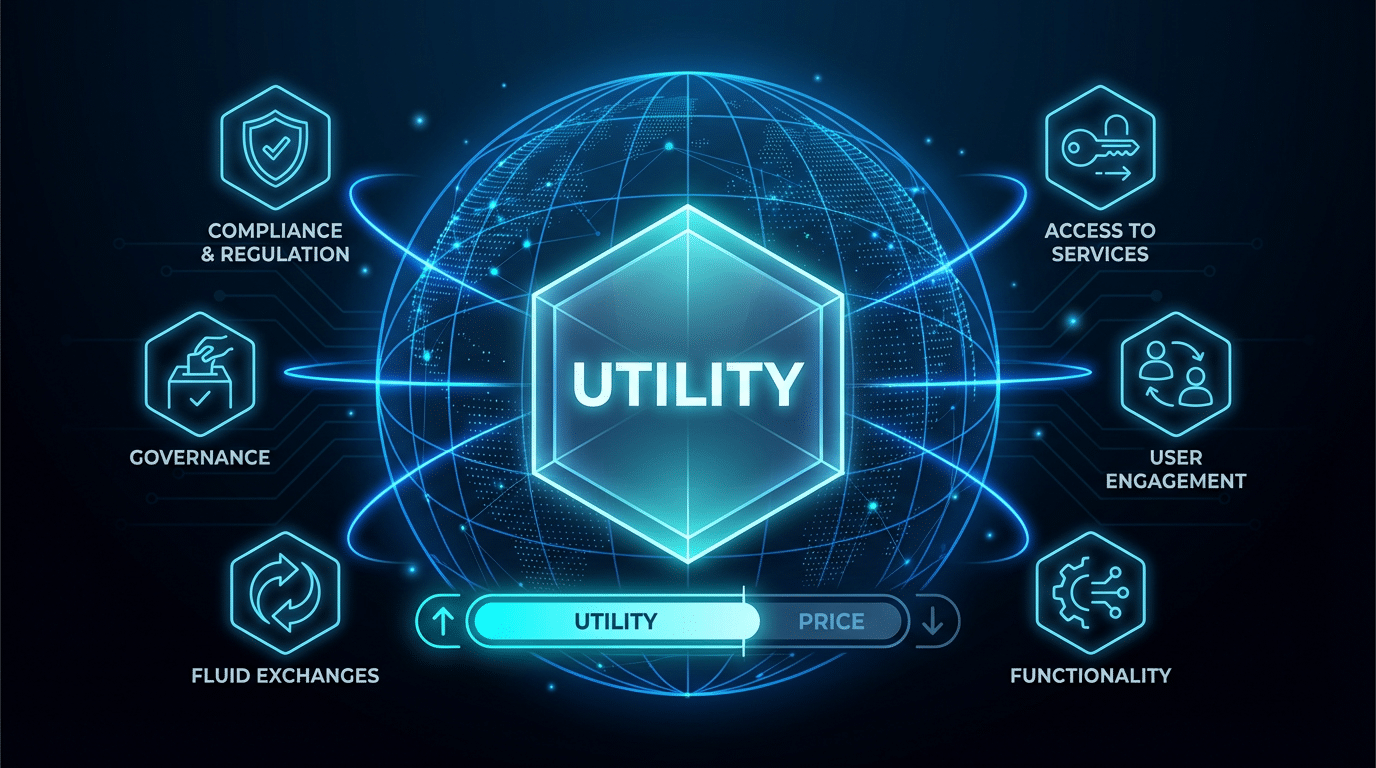
1. Access services or features
One of the main forms of’utility of a utility token is access to services:
- use of a platform,
- payment of internal costs,
- access to advanced features.
The token then becomes an indispensable functional tool for the ecosystem.
2. Streamlining exchanges within the ecosystem
A utility token can also serve as internal means of exchange,
promoting smoother, more transparent and automated interactions.
This approach relies in particular on smart contracts and reduces the need for intermediaries.
3. Encourage user engagement
Many projects use the’utility of a utility token to encourage:
- active participation,
- contribution to the ecosystem,
- long-term loyalty.
Usefulness of a utility token and governance
In some ecosystems, the utility of a utility token extends to the governance.
It can enable:
- to participate in votes,
- to contribute to strategic directions,
- to enhance the transparency of the project.
Why the utility of a utility token is more important than its price
Evaluating a utility token solely by its price is a common mistake.
In the long term, the essential criteria are:
- the clarity of its usefulness,
- its coherent integration into the ecosystem,
- the robustness of the regulatory framework.
On this point, European texts such as the work of ESMA provide a structured framework for utility tokens.
The Ravel Group's approach to the usefulness of utility tokens
At de Ravel Group, We consider that the utility of a utility token should be:
- clear and understandable,
- backed by a real need,
- part of a long-term vision.
This philosophy guides the project in particular. DRVL token, designed as a tool serving a structured ecosystem.
Learn more about the group's vision:
Ravel Group: the birth of an independent group
Conclusion: the usefulness of a utility token above all else
The’utility of a utility token is based on its actual use, consistency and sustainability.
A well-designed utility token is not a promise, but a structuring tool at the heart of an ecosystem.